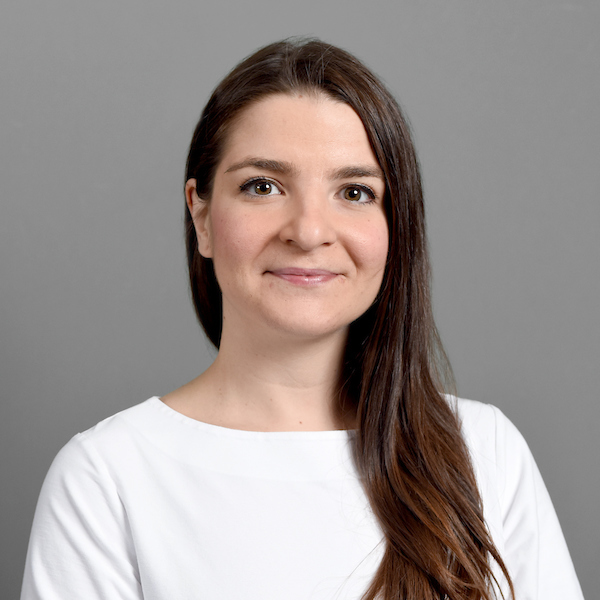
 Giulia Pedrielli (Arizona State University) | Thinking about the box: analysis, design, control of structure-rich systemsAbstractSystems across automotive, bio-pharma, aerospace, energy, are now understood as Cyber Physical Systems, with simulation as a standard tool to evaluate their performance independently from the purpose of the analysis being optimization, control, certification. As a result, black-box optimization, that can embed simulation as an oracle to perform a wide range of analyses, has attracted a lot of attention from the science and engineering communities. In this talk, we look into the broad class of Black-box optimization methods, focusing on random search approaches (such randomness is injected in the search independently from the problem being affected by noise), and particular on the class of Bayesian optimization methods. We present several enhancements to the basic Bayesian optimization workflow that: (1) extend the applicability of Bayesian optimization (BO) approaches to the case of level set estimation, (2) scale into large data sets, (3) allow to embed known structure in the cost function. Part-X (1) is a family of partitioning informed Bayesian optimizers that can identify regions that are interesting to the user. MAroBO (2) is the first Multi-agent implementation of BO with Rollout and allows scaling in presence of large data sets. CGPT (3) allows to encode tree structures in rewards accelerating search by orders of magnitude. DiffTilt (4) extends these models to large scale spaces and provides a generative perspective to the sampling problem. We present algorithmic details, convergence and finite time characterization of the different approaches and we empirically demonstrate when and why such modified workflows achieve better performance. BioGiulia is currently Associate Professor for the School of Computing & Augmented Intelligence (SCAI) at Arizona State University. She graduated from the Department of Mechanical Engineering of Politecnico di Milano. Giulia develops her research in design and analysis of random algorithms for global optimization, with focus on improving finite time performance and scalability of these approaches. Her work is motivated by design and control of next generation manufacturing systems in bio-pharma and aerospace applications, as well as problems in the design and evaluation of complex molecular structures in life-science. Applications of her work are in individualized cancer care, bio-manufacturing, design and control of self-assembled RNA structures, verification of Cyberphysical systems. Her research is funded by the NSF, DHS, DARPA, Intel, Toyota, Lockheed Martin. |
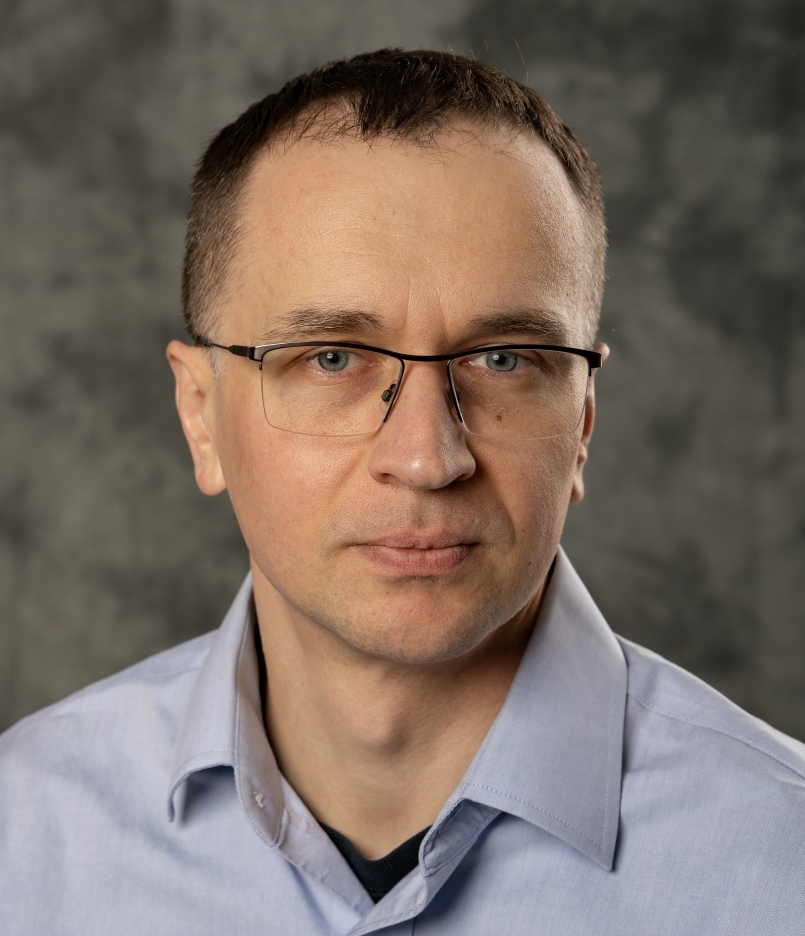 Stanley Bak (Stony Brook University) | Falsifying CPS using AI/MLAbstractAI and ML are increasingly being used to help design CPS. This talk will focus on the CPS test generation problem (falsification), and how AI/ML can help. We will discuss FreaK, which uses Koopman Operator surrogate modeling to quickly falsify CPS. FreaK had the highest falsification rate / speed metric result in the recent ARCHCOMP falsification competition. We will also discuss using LLMs on the falsification problem and how optimization with natural language is possible, and how it can be beneficial in CPS falsification specifically. BioStanley Bak received his PhD from the Department of Computer Science at the University of Illinois at Urbana-Champaign (UIUC) in 2013 and then worked for several years at the Air Force Research Laboratory (AFRL) in the Verification and Validation (V&V) group of the Aerospace Systems Directorate. He received the AFOSR Young Investigator Research Program (YIP) award in 2020 and the NSF CAREER award in 2023. He is currently an associate professor in the Department of Computer Science at Stony Brook University. |
 Alberto Speranzon (Lockheed Martin) | On the Design of Autonomous Systems: Opportunities and Challenges in the OODA LoopAbstractAutonomous systems embody the complexity of modern CPS. Recent breakthroughs in AI and ML have accelerated the development of autonomy, yet they also expose new design challenges and untapped opportunities. In this talk we decompose a generic autonomous system using the Observe‑Orient‑Decide‑Act (OODA) loop, offering a framework for examining the key challenges that arise at each stage. We will explore emerging neuro‑symbolic approaches that enable the construction of rich world‑model representations, the learning of efficient probabilistic abstractions, and the mitigation of high‑dimensional decision processes, especially in multi‑agent scenarios. The discussion will also focus on assurance challenges, both at design time and runtime, that are essential for ensuring that system requirements are consistently met throughout the OODA loop. By highlighting the need for integrated verification of neuro‑symbolic components, compositional design, and cross‑layer co‑design, we aim to identify the principal research gaps. Addressing these gaps presents significant opportunities for advancing design automation in CPS and IoT, ultimately enabling more reliable and trustworthy autonomous systems. BioAlberto Speranzon is a Lockheed Martin Technical Fellow and Chief Scientist for Autonomy at the Advanced Technology Labs (ATL), LM’s research arm. At ATL he leads projects at the intersection of autonomy, AI, and machine learning, emphasizing compositional design methods, neuro‑symbolic approaches, and their application to the design and verification of complex systems. He earned his Ph.D. in Electrical Engineering from the Royal Institute of Technology (KTH), Sweden, in 2006. Prior to joining Lockheed Martin, Alberto was a Technical Fellow at Honeywell Aerospace, where he worked on advanced aerial‑mobility solutions, and before that a research scientist at United Technologies Research Center (now RTX Research Center), tackling problems ranging from efficient building control to autonomous helicopters. Alberto has served as PI or Co‑PI on numerous government‑funded programs (DARPA, NASA) that develop novel navigation techniques for GPS‑degraded/denied environments and tools for the compositional modeling of multi‑agent autonomous systems. He is a Senior Member of IEEE, an associate editor for the IEEE Open Journal of Control Systems (OJ‑SYS), a former associate editor for IEEE Transactions on Control Systems Technology (TCST), and a former member of the Board of Governors of the IEEE Control Systems Society. |
 Ezio Bartocci (TU Wien) | Signal Feature Coverage and Testing for CPS Dataflow ModelsAbstractThe design of cyber-physical systems (CPS) typically involves dataflow modeling. The structure of dataflow models differs significantly from that of traditional software, making standard coverage metrics inadequate for assessing the thoroughness of testing. To address this limitation, this talk presents signal feature coverage, a coverage metric specifically designed for systematically testing CPS dataflow models. The metric leverages signal features to capture relevant behaviors of signals within the model. We developed a testing framework in Simulink, a widely used dataflow modeling and simulation environment, that automates the generation and execution of test cases guided by this coverage metric. The approach has been evaluated on five Simulink models against ten Signal Temporal Logic specifications. Our coverage-based testing strategy is compared with adaptive random testing, falsification testing, output diversity–based techniques, and testing using MathWorks’ Simulink Design Verifier. The results show that signal feature coverage improves fault detection capability compared to these conventional approaches. Ezio Bartocci, Leonardo Mariani, Dejan Nickovic, and Drishti Yadav. 2025. Signal Feature Coverage and Testing for CPS Dataflow Models. ACM Trans. Softw. Eng. Methodol. 34, 7, Article 199 (September 2025), 37 pages. https://doi.org/10.1145/3714467 BioEzio Bartocci is a Full Professor at TU Wien, where he leads the Trustworthy Cyber-Physical Systems (TrustCPS) Research Group within the Cyber-Physical Systems Research Unit. His research focuses on formal methods and computational tools for ensuring the safety, security, energy efficiency, and correctness of AI-based cyber-physical systems, with a strong emphasis on sustainability. He received the B.S. in Computer Science, the M.S. in Bioinformatics, and the Ph.D. in Information Science and Complex Systems from the University of Camerino, Italy. From 2010 to 2012, he was a Postdoctoral Researcher at Stony Brook University, where he contributed to the NSF-funded CMACS project on computational cardiac dynamics. He joined TU Wien in 2012, became Assistant Professor in 2015, Associate Professor in 2019, and Full Professor in 2020. He currently serves as Vice-Chair of the Marie Skłodowska-Curie COFUND doctoral programme LogiCS@TU Wien, Chair of the Doctoral College on Trustworthy Autonomous Cyber-Physical Systems, and Research Focus Coordinator for Computer Engineering at the Faculty of Informatics, TU Wien. His work has received multiple Best Paper Awards (EMSOFT 2025, QEST 2022, RV 2011), the Radhia Cousot Young Researcher Award (SAS 2022), and the EASST Best Software Science Award (ETAPS 2022). |