Abstract: Pushing autonomous systems to their operational limits reveals critical insights into the intersection of AI, real-time decision-making, and high-performance control. In this talk, I will discuss the design, architecture, and operational challenges behind Cavalier Autonomous Racing, a world-record-holding autonomous Indy race car, which competes at the highest levels of AI-driven motorsport. We will explore the critical engineering decisions that enable autonomy at the edge of performance, balancing perception, planning, and control under extreme dynamic constraints. From high-fidelity simulation to real-world deployment, I will highlight the iterative co-design of software and hardware that allows an autonomous vehicle to operate at speeds exceeding 170 mph while maintaining safety and precision. The talk will also cover the unique challenges of system integration, from sensor fusion and real-time computing to vehicle dynamics and predictive control. Through this lens, autonomous racing offers insights that extend beyond the track, informing the design of next-generation AI-driven mobility solutions.
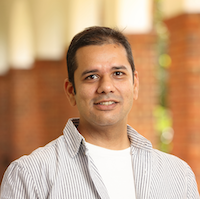
Biography: Dr. Madhur Behl is an Associate Professor in the Department of Computer Science at the University of Virginia. He is the founder and team principal for UVA’s Cavalier Autonomous Racing team – the first American team to win the Indy Autonomous Challenge. Behl also co-founded the F1tenth autonomous racing platform and the international F1tenth Grand Prix competitions. He received his Ph.D. (2015) and M.S. (2012), in Electrical and Systems Engineering, both from the University of Pennsylvania. Dr. Behl is an IEEE Senior Member and the recipient of the NSF CAREER Award. He holds several editorial positions for the Journal of Field Robotics, the SAE Journal on Connected and Autonomous Vehicles, and the IEEE Robotics and Automation Society. He also serves on the Academic Advisory Council of the Partners for Automated Vehicle Education (PAVE) campaign, to help promote public understanding of autonomous vehicles and their potential societal benefits.