LEAD PI
TITLE (with link to Poster and Abstract)
 Submitted by Emily Wehby on November 3rd, 2016
David Corman is a Program Director and leader of the Cyber-Physical Systems program at the National Science Foundation. Dr. Corman is a Research Associate Professor at Washington University St. Louis in the Department of Electrical and Systems Engineering. Dr. Corman has a broad range of research interests spanning many technologies fundamental to CPS application areas including transportation, energy, medical devices, and manufacturing. Dr. Corman has extensive industrial experience in the development, design, and manufacture of CPS systems. Dr. Corman received the Ph. D.
Submitted by David Corman on November 3rd, 2016
The talk focuses on two major new challenges for the future Internet of Things (IOT) which will rely on CPS solutions. These challenges are the new types of systems of systems issues that arise and the problems due to enormous scaling in numbers and density of smart devices that will exist in the future.
 Submitted by John Stankovic on November 3rd, 2016
 Submitted by S. Sastry on November 3rd, 2016
Radha Poovendran is a professor and chair of the department of electrical engineering at the University of Washington, where he has been since 2000. His research areas are wireless security and cyber-physical systems security. He is a recipient of the NSA Rising Star Award (1999), NSF CAREER award (2001), ARO YIP (2002), ONR YIP (2004), PECASE (2005), Kavli Faculty Fellow of the National Academy of Sciences (2007). He is a recipient of the UW EE Outstanding Teaching Award (2002) and Outstanding Research Award (2002).
Submitted by Radha Poovendran on November 3rd, 2016
George J. Pappas is the Joseph Moore Professor and Chair of the Department of Electrical and Systems Engineering at the University of Pennsylvania. He also holds a secondary appointment in the Departments of Computer and Information Sciences, and Mechanical Engineering and Applied Mechanics. He is member of the GRASP Lab and the PRECISE Center. He has previously served as the Deputy Dean for Research in the School of Engineering and Applied Science.
 Submitted by George Pappas on November 3rd, 2016
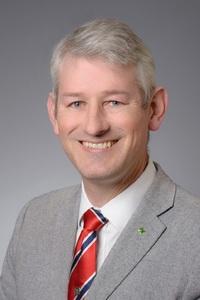
Ricardo G. Sanfelice is an Associate Professor of Computer Engineering, University of California at Santa Cruz, CA, USA. He received his M.S. and Ph.D. degrees in 2004 and 2007, respectively, from the University of California, Santa Barbara. During 2007 and 2008, he was a Postdoctoral Associate at the Laboratory for Information and Decision Systems at the Massachusetts Institute of Technology and visited the Centre Automatique et Systemes at the Ecole de Mines de Paris for four months. Prof.
 Submitted by Jonathan Sprinkle on November 3rd, 2016
Sertac Karaman received his Ph.D. in Computer Science from Brown University in 1983 is the Charles Stark Draper Assistant Professor of Aeronautics and Astronautics at the Massachusetts Institute of Technology (since Fall 2012). He has obtained B.S. degrees in mechanical engineering and in computer engineering from the Istanbul Technical University, Turkey, in 2007, an S.M. degree in mechanical engineering from MIT in 2009, and a Ph.D. degree in electrical engineering and computer science also from MIT in 2012.
Submitted by Sertac Karaman on November 3rd, 2016
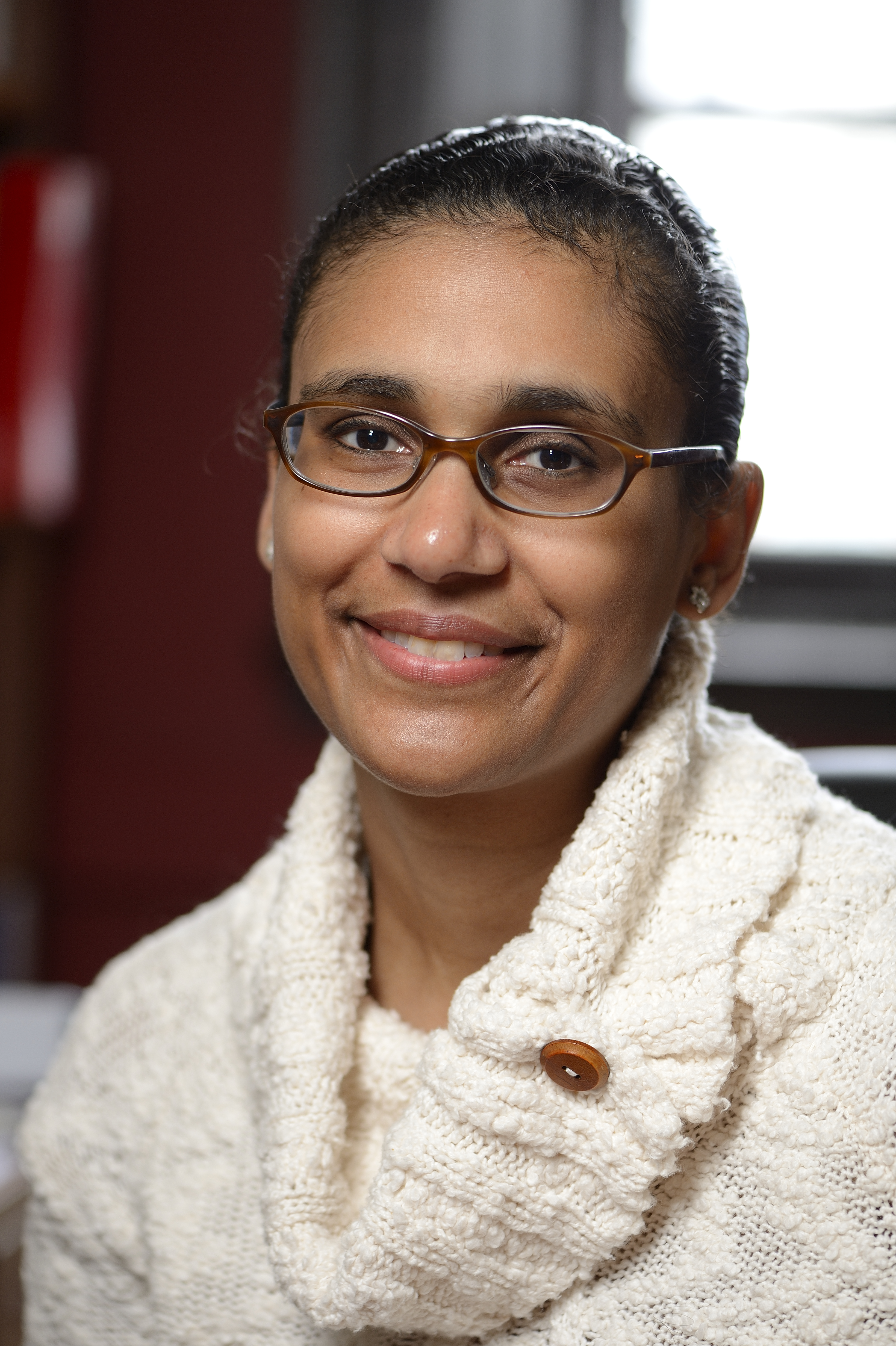
Dennice F. Gayme received a B. Eng & Society from McMaster University in 1997 and an M.S. from the University of California at Berkeley in 1998, both in Mechanical Engineering. In 2010, she received her Ph.D. in Control and Dynamical Systems from the California Institute of Technology, where she was a recipient of the P.E.O. scholar award in 2007 and the James Irvine Foundation Graduate Fellowship in 2003.
 Submitted by Dennice Gayme on November 3rd, 2016
Jana Doppa is an Assistant Professor of Computer Science at Washington State University, Pullman. He earned his PhD working with the Artificial Intelligence group at Oregon State University (2014); and his MTech from Indian Institute of Technology (IIT), Kanpur, India (2006). His general research interests are in the broad field of Artificial Intelligence (AI) and its applications including planning, natural language processing, and computer vision.
Submitted by Diane Cook on November 3rd, 2016